After several months of cold, gray skies, and slowdown, it's normal to feel drained, lethargic, or simply flat when February arrives. This period can weaken our motivation, or inner fire, and make it harder to maintain our energy and momentum. To rekindle that fire naturally, it can be inspiring to connect ancient healing traditions with current scientific discoveries to better understand how to support our mood and vitality.
This article is intended as a short guide to cultivating greater emotional resilience and amplifying our inner light this month. By slightly adjusting our environment, our diet, our daily habits, and by offering ourselves a few botanical allies, it may become possible to gently rekindle that flickering flame in the heart of winter.
Light: your ally against seasonal depression
Lack of natural light is one of the main triggers of seasonal depression, hence the importance of exposing oneself to it as much as possible. [i] Even on a gray day, outdoor light is far brighter than indoor light, making a short daily outing beneficial. Ideally, this outing should be about thirty minutes in the morning, when the body best synthesizes vitamin D thanks to UV rays. [ii] Since this vitamin plays a key role in many processes, it is best obtained through daylight or, if necessary, through a supplement.
Cultivate a positive and peaceful mindset
Winter depression is often accompanied by negative thoughts and withdrawal, but changing your mindset can naturally help. [iii] Keeping a journal and noting three positive things each day for which you feel gratitude can help refocus your attention on what matters and gradually improve your mood and resilience. [iv] Furthermore, practicing daily meditation, even brief meditation, can bring clarity, calm, and self-compassion. Breathing exercises or guided meditations can indeed reduce anxiety and improve concentration. [v] .
Move to regain momentum
It can sometimes be difficult to stay active during the winter. However, exercise is an important tool for managing emotions and anxiety, and perhaps a way to boost energy. [vi] Finding ways to move every day is even more important in winter. Regularly engaging in moderate aerobic exercise (such as brisk walking) can help relieve low mood, helps maintain metabolic rate, and supports vitality by influencing serotonin levels. [vii] .
Eating well to fuel your energy
The foods we eat also influence brain chemistry, particularly serotonin, which plays an important role in mood. In winter, a drop in serotonin can cause a strong craving for carbohydrates, especially sweets and starchy foods. [viii] To support energy without causing sudden fluctuations in blood sugar [ix] It's best to choose complex carbohydrates (like oats or quinoa), combine them with fiber, and consume enough protein. It's also recommended to monitor caffeine intake, as excessive consumption can lead to nervousness and energy fluctuations despite a temporary stimulating effect. [x] .
Adaptogens: natural allies for winter
Adaptogens can help the body resist the effects of stress and can increase vitality by supporting the nervous system. Their balancing and toning qualities make them valuable allies during the long winter months.
Ginseng
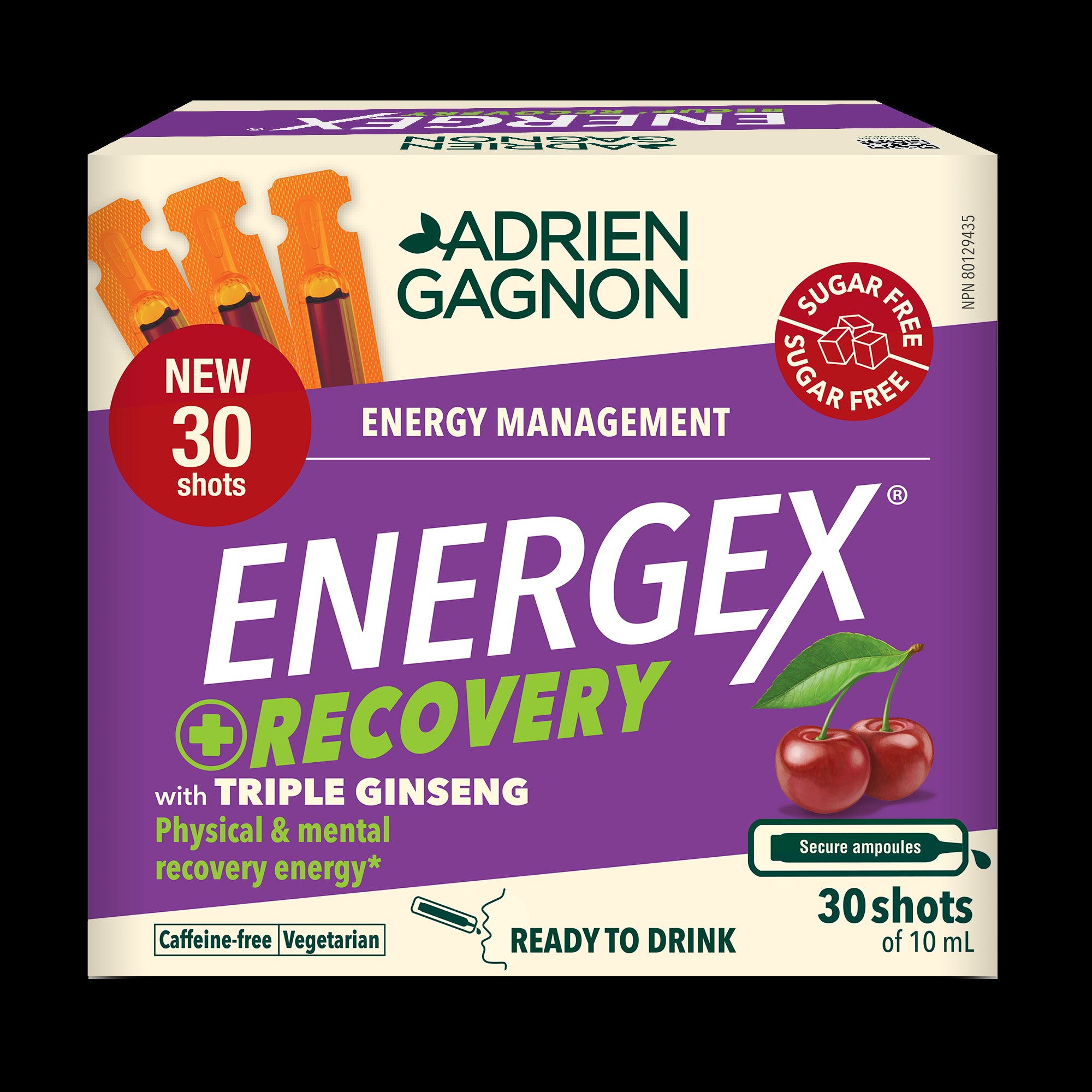
Panax ginseng is an adaptogen whose benefits have been demonstrated by numerous scientific studies and which has been used for over 3,000 years in traditional medicine. [xi] It is considered warming and stimulating, making it one of the most widely used plants for exhaustion and adrenal fatigue. [xii] Its medicinal power comes primarily from ginsenosides and polysaccharides. [xiii] .
Ashwagandha
Ashwagandha is one of the most widely used restorative herbs in Ayurvedic medicine. It is valued for its ability to promote vitality, longevity, and a state of non-specific resistance to stress. [xiv] This plant is unique because of its two-way effect; for example, it can be energizing for an exhausted person, but calming for an agitated one. [xv] .
Cordyceps
Cordyceps is an adaptogenic mushroom renowned for its long history of use and the numerous studies that demonstrate its benefits. Its medicinal properties stem from its high concentration of polysaccharides [xvi]When cordyceps is used in synergy with other adaptogens such as rhodiola, endurance is improved without increasing the body's oxidative stress, that is, the series of attacks caused by oxygen-derived molecules that damage certain cells in our body and cause their deterioration. [xvii] . This has the effect of supporting the body during physical exertion and promoting its recovery.
Conclusion: Make winter a season of rejuvenation
Winter isn't just a season to get through, but an invitation to slow down and practice intentional self-care. By cultivating light, whether it comes from the sun, our thoughts, or our habits, by nourishing our bodies with balanced choices, and by relying on natural allies like adaptogens, we can transform this time into a moment of rejuvenation. Every little gesture counts: a walk in the fresh air, a few minutes of meditation, a comforting and nutritious meal… Together, these actions can help rekindle our inner fire and prepare us to welcome spring with energy and serenity.
[i] P. 102 Hadsall, Ellie Conquering the Winter Blues: Over 60 Steps to Tackles Seasonal Affective Disorder (2020) 124p.
[ii] Fiberman, Jacob, Light: Medicine of the Future (Santa Fe, NM: Bear and Company, 1991; reprinted 1998).
[iii] Greenberger, D., & Padesky, C. A. (1995). Mind over mood: Change how you feel by changing the way you think. New York: Guilford Press.
[iv] Chapter 6 Marshall, Fiona & Cheevers, Peter Positive Options for Seasonal Affective Disorder (SAD): Self Help and Treatment (2003) Ed. Hunter House, 148p.
[v] Rosenthal, Norman, Winter Blues: Seasonal Affective Disorder—What It Is and How to Conquer It (Fontana, 1991).
[vi] Burns, D.D. (1999). Feeling good: The new mood therapy—The clinically proven drug-free treatment for depression. New York: HarperCollins.
[vii] Part IV Peeke, P. (2000). Fight fat after forty. New York: Viking Penguin. Peeke, P. (2005). Body for life for women. Emmaus, PA: Rodale Press.
[viii] KRUACHI, K., WIRZ-JUSTICE, A., GRAW, P. (in press), “The Relationship of Affective State to Dietary Preference: Winter Depression and Light therapy as a Model’ , Journal of Affective Disorders.
[ix] ROSENTHAL, N., et al. (1989 ), 'Psychobiological Effects of Carbohydrate- and Protein-Rich Meals in Patients with Seasonal Affective Disorder and Normal Controls' , Biological Psychiatry, vol. 25, pp.1029-40.
[x] E. Rosenthal, Norman, MD Winter Blues: Everything you Need to Know to Beat Seasonal Affective Disorder (2006) Ed. The Gilford Press, 384p.
[xi] Ben-Hur E., Fulder S. “Panax ginseng saponins and Eleutherococcus senticosus on survival of cultured mammalian cells after ionizing radiation.” Am J Chin Med. 1981 Spring;9(1): 48-56. Retrieved from https://www.ncbi.nlm.nih.gov/pubmed/7304498.
[xii] Gaffney BT, Hiigel HM, Rich PA “The effects of Eleutherococcus senticosus and Panax ginseng on steroidal hormone indices of stress and lymphocyte subset numbers in endurance athletes.” Life Sci 2001 Dec 14;70(4): 431-42.
[xiii] Panossian, A. “Adaptogens exert a stress-protective effect by modulation of expression of molecular chaperones.” Phytomedicine 2009 Jun;16(6-7): 617-22
[xiv] “Ashwagandha.” HerbalGram. 99:1-7. Retrieved from http://cms.herbalgram. org/herbalgram/issue99/hg99-herbprofile. html?ts=1548632461 &signature= d6df24b9b8 1 3aeb80f456c31461ac59c.
[xv] Ayales, Adriana Adaptogens: Herbs for Longevity and Everyday Wellness (2019) Ed. Sterling Ethos 168p.