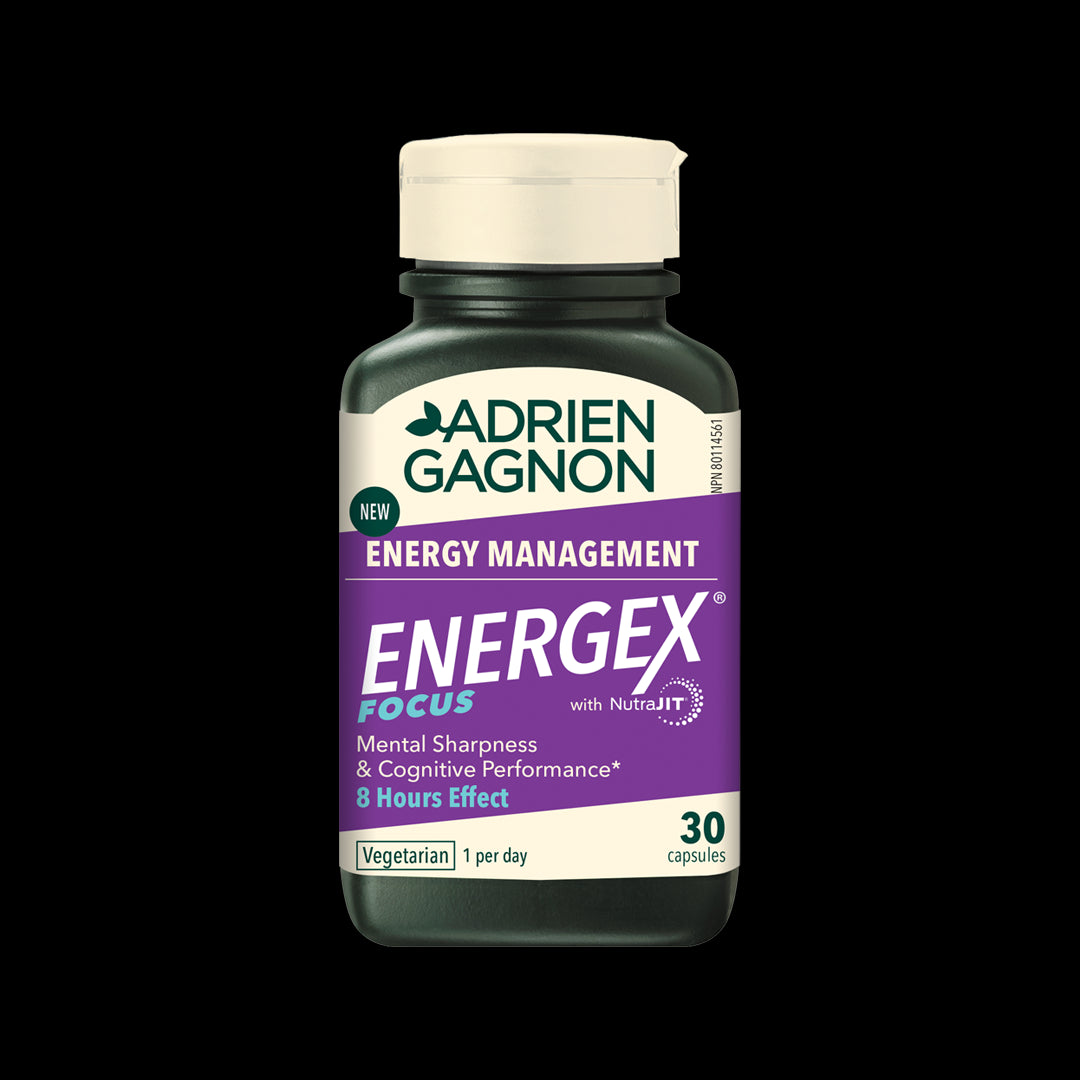
Green tea has long been recognized for its benefits on mental alertness. If it helps you feel more focused, it's not thanks to a single ingredient, but rather to the combined action of three compounds naturally present in its leaves: L-theanine, caffeine and EGCG, an antioxidant from the catechin family. Together, they help create a state of calm alertness, where the mind remains awake, but without the nervousness sometimes associated with stimulants. To better understand this effect, we must first see how these compounds affect attention, stress, and cognitive health.
Improved concentration and attention
L-theanine is an amino acid naturally present in green tea. It promotes the production of alpha waves in the brain, a type of brain activity associated with a state of relaxed attentiveness. In other words, it helps calm the mind while maintaining a good level of alertness, without causing drowsiness1. EGCG, on the other hand, is the most abundant polyphenol in green tea. As an antioxidant, it contributes in part to the positive effects associated with green tea, particularly on certain functions related to learning and information retention2.
Stress reduction and mood regulation
After attention, another important effect of green tea concerns how the brain responds to stress. Rather than simply stimulating alertness, some of its compounds also help support a more settled mental state, which can promote better emotional stability in daily life.
L-theanine helps calm the brain's response to stress by reducing excessive nervous activity and influencing certain chemical messengers involved in mental balance3. EGCG could also support this calming effect by acting on GABA, a nervous system messenger associated with calm and relaxation. This action could help the body better modulate its response during periods of occasional stress4. L-theanine could also support mood by promoting the production of dopamine and serotonin, two chemical messengers linked to motivation, emotional well-being, and concentration5.
Long-term mental health and neuroprotection
Green tea could also play an interesting role in long-term brain protection. Some observational studies have associated higher green tea consumption with better cognitive health in older adults and a lower presence of cognitive disorders6. This effect would be partly linked to EGCG, a powerful antioxidant naturally present in green tea, which could help protect nerve cells against certain mechanisms associated with brain aging. Research suggests that EGCG could limit the formation of beta-amyloid deposits and tau protein aggregates, two phenomena typically observed in Alzheimer's disease7. It could also help protect dopamine-related neurons, which are particularly affected in Parkinson's disease8. In parallel, EGCG and L-theanine participate in the brain's antioxidant defense by helping to reduce the effects of oxidative stress on brain tissues9.
The synergy between L-theanine and caffeine
It is primarily the combination of L-theanine and caffeine that explains the effect of calm alertness often associated with green tea. Caffeine supports wakefulness and vigilance, while L-theanine helps moderate this stimulation by promoting a more relaxed state. Together, these two compounds can therefore support concentration without necessarily causing the ups and downs sometimes felt with coffee.
Influence on neurotransmitters
Both L-theanine and caffeine act on certain chemical messengers in the brain, which helps explain their effect on mood, alertness, and concentration. L-theanine could naturally promote the production of dopamine and serotonin, two neurotransmitters associated with motivation, emotional well-being, and the ability to stay concentrated10. Caffeine, on the other hand, further stimulates wakefulness by promoting the release of neurotransmitters such as norepinephrine, dopamine, and serotonin, which participate in attention and mental energy levels11.
Synergistic cognitive enhancement
Together, L-theanine and caffeine can support more flexible and effective attention. This synergy would help the brain switch more easily from one task to another, while improving the ability to set aside distractions to focus on truly relevant information12. This is why this combination is particularly interesting during activities that require sustained mental effort, such as analysis, learning, or problem-solving13.
Balance between stimulation and relaxation
Caffeine stimulates wakefulness by blocking the action of adenosine, a molecule involved in feelings of fatigue and sleep regulation. Conversely, L-theanine promotes a state of mental relaxation without causing drowsiness. This soothing action can also mitigate some of caffeine's overly stimulating effects, such as nervousness, tremors, or increased blood pressure, by making the stimulation gentler and more balanced14.
Prolonged energy release
In green tea, caffeine is absorbed more gradually than in coffee. It can bind to larger catechin molecules, which are then slowly broken down and assimilated by the body. This process would allow for a gradual release of caffeine into the blood over a period of about three to four hours. This slower absorption helps maintain more stable mental energy and concentration, while avoiding the rapid peaks followed by a "fatigue crash" sometimes associated with coffee15.
Conclusion
In summary, green tea supports concentration in a balanced way thanks to the complementary action of L-theanine, caffeine and EGCG. This synergy helps foster a clear mind, more stable mental energy, and a better balance between stimulation and relaxation.
References
1.Haque AM, Hashimoto M, Katakura M, Tanabe Y, Hara Y & Shido O. (2006) Long-termadministration of green tea catechins improves spatial cognition learning ability in rats.J Nutr. 136:1043-1047.
2. Haque AM, Hashimoto M, Katakura M, Hara Y & Shido O. (2008) Green tea catechinsprevent cognitive deficits caused by Aβ (1-40) in rats. J Nutr Biochem. 19:619-626.
3. Cui K, Luo X, Xu & Ven Murthy MR. (2004) Role of oxidative stress inneurodegeneration: recent developments in assay methods for oxidative stress andnutraceutical antioxidants. Prog Neuropsychopharmacol Biol Psychiatry. 28:771-799.
4. Cohen G. (1988) Oxygen radicals and Parkinson’s disease, in, Oxygen Radicals andTissue Injury (Halliwel B., ed), pp. 130-135. Federation of American Societies forExperimental Biology, Bethesda, Maryland.
5. Butterfield DA, Reed TT, Perluigi M, De Marco C, Coccia R, Keller JN, Markesbery WR &Sultana R. (2007) Elevated levels of 3-nitrotyrosine in brain from subjects with amnestic
mild cognitive impairment: implications for the role of nitration in the progression ofAlzheimer's disease. Brain Res. 1148:243-248.
6. Floyd RA & Hensley K. (2002) Oxidative stress in brain aging. Implications fortherapeutics of neurodegenerative diseases. Neurobiol Aging. 23: 795-807.
7. Yokogoshi, H., Kobayashi, M., Mochizuki, M. & Terashima, T. (1998a). Effect of theanine,γ-glutamylethylamide, on brain monoamines and striatal dopamine release in consciousrats. Neurochem. Res., 23, 667-673.
8. Dulloo, AG; Seydoux, J; Girardier, L; Chantre, P; Vendermander, J. Green tea andthermogenesis: interactions between catechin-polyphenols, caffeine, and sympatheticactivity. Int. J. Obes. Relat. Metab. Disord. 2000, 24, 252-258.
9. Gomez-Ramirez, M., Higgins, B.A., Rycroft, J.A., Owen, G.N., Mahoney, J., Shpaner, M. &Foxe, J.J. (2007). The deployment of intersensory selective attention: a high-densityelectrical mapping study of the effects of theanine. Clin. Neuropharmacol., 30, 25-38.
10. Kuriyama S, Hozawa A, Ohmori K, Shimazu T, Matsui T, Ebihara S, Awata S, NagatomiR, Arai H & Tsuji I. (2006) Green tea consumption and cognitive function: a cross-sectional study from the Tsurugaya Project 1. Am J Clin Nutr. 83:355-361.
11. Hartley, T.R., Lovallo, W.R., Whitsett, T.L., Sung, B.H., & Wilson, M.F. (2001).Caffeine and stress: implications for risk, assessment, and management of hypertension.J Clin Hypertens, 3, 354-361.
12. Kakuda, T., Nozawa, A., Unno, T., Okamura, N. & Okai, O. (2000a). Inhibiting effects oftheanine on caffeine stimulation evaluated by EEG in the rat. Biosci. Biotechnol.Biochem., 64, 287-293.
13.Yokogoshi, H., Kato, Y., Sagesaka, Y.M., Takihara-Matsuura, T., Kakuda, T., &Takeuchi, N. (1995). Reduction effect of theanine on blood pressure and brain 5-hydroxyindoles in spontaneously hypertensive rats. Biosci Biotech Biochem, 59, 615-618
14.Abd El Mohsen MM, Kuhnle G, Rechner AR, Schroeter H & Rose S, et al. (2002) Uptakeand metabolism of epicatechin and its access to the brain after oral ingestion. FreeRadic Boil Med. 33:1693-1697.
15.Anderson RA & Polansky MM. (2002) Tea enhances insulin activity. J Agric Food Chem.50:7182-7186.